Fares Proposal
1. The core principles
Goals
- Make fares instantly understandable
- Cut boarding times (important for reliability)
- Protect revenue by keeping adult fares realistic
- Strong social return: young people + older people travel free
Non-negotiables
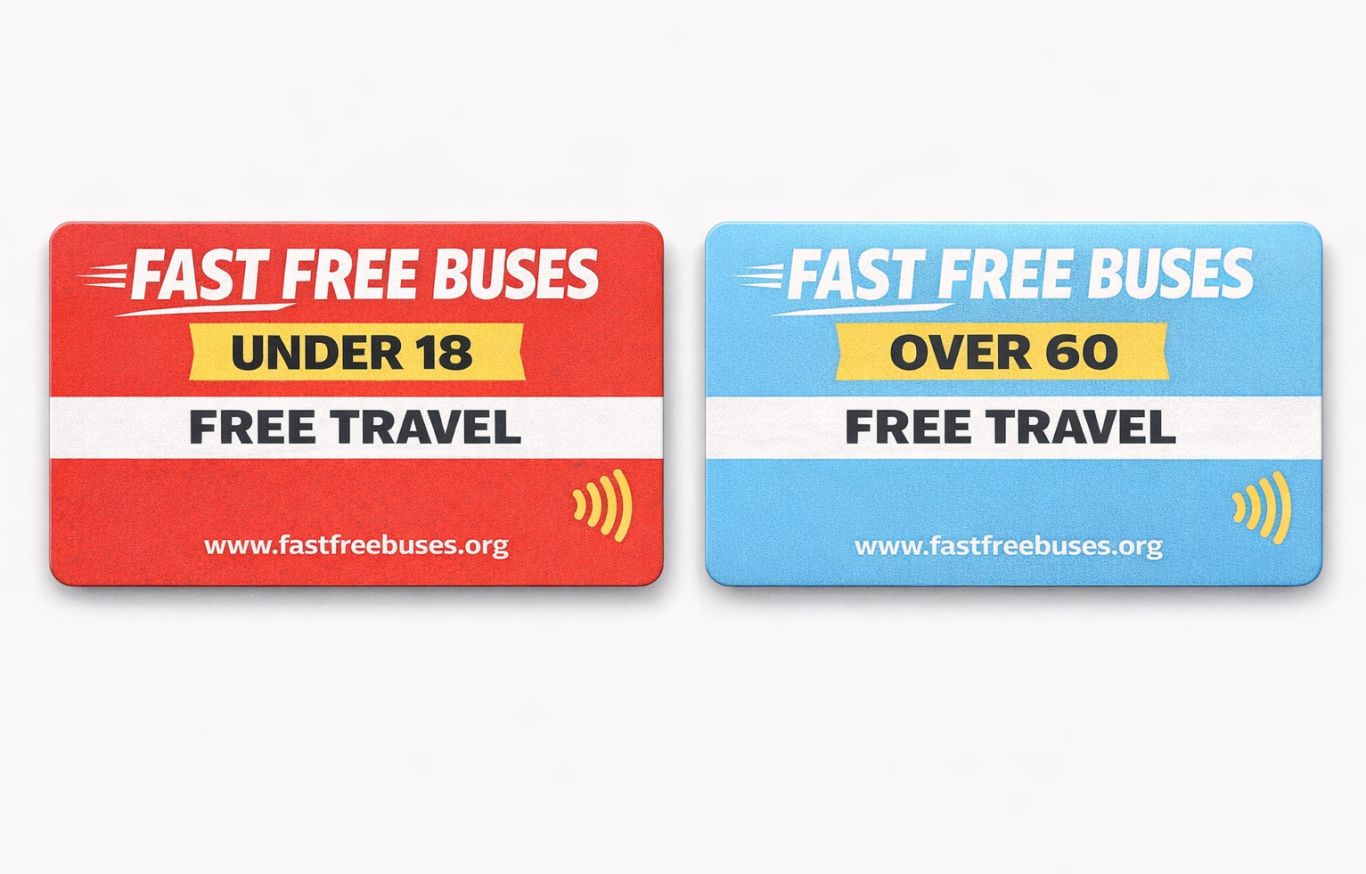
- Under 18: FREE
- Over 60: FREE
- No peak/off-peak nonsense
- No zones, no distance calculations
- One fare covers the whole network
2. context (assumed, but realistic)
operates mainly:
- Short to medium urban routes
- Town ↔ town links
- School and college-heavy corridors
- High proportion of concessionary passengers already
That makes them ideal for flat fares — long rural cross-county routes are where flat fares struggle, and companies mostly avoid those.
3. The proposed flat fare structure
🎟️ Single fares
Passenger Fares
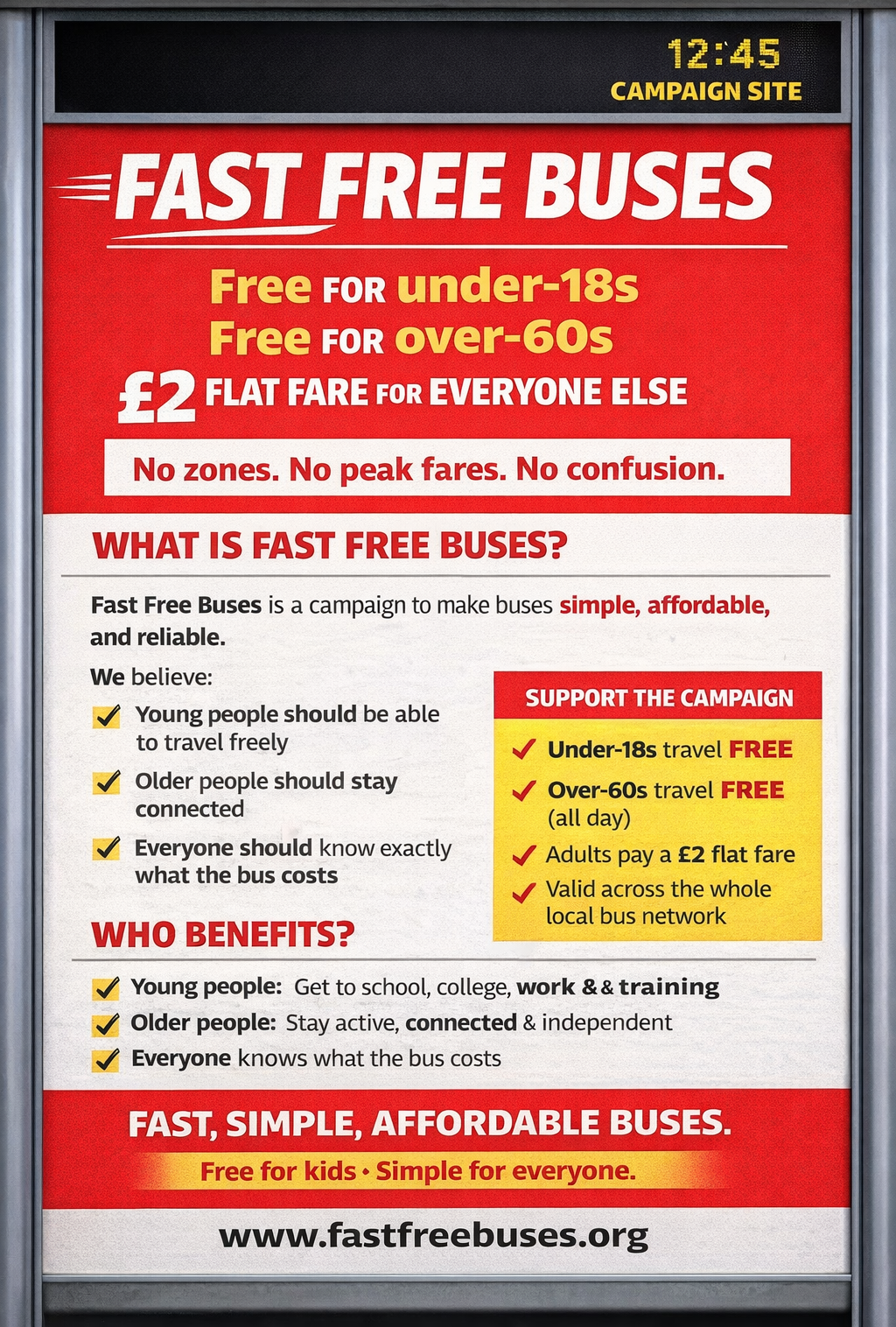
Under 18. FREE
Over 60. FREE
Adult (18–59). £2 flat
Why £2?
- Matches what people already understand (national cap legacy)
- Psychologically “cheap but not suspicious”
- High enough to avoid revenue collapse
- Low enough to pull people out of cars
🎫 Day tickets (optional but sensible)
Ticket Prices
Adult Day Rover. £4
Family Day (up to 2 adults + kid. £6
Under 18 / Over 60.FREE - Smartcard for tap/on tap/off
This:
- Encourages discretionary travel
- Keeps weekend ridership strong
- Still stays dead simple
4. Weekly / monthly passes
Flat fares work best when passes don’t undercut singles too aggressively.
Pass Price
Adult Weekly. £18
Adult Monthly. £65
Under 18 / Over 60. FREE
No youth passes.
No senior passes.
No eligibility arguments at the cab.
5. Eligibility & enforcement (important)
Under 18
- Free travel with:
- School ID
- Citizen card
- Or a companie issued youth Smartcard for tap/on tap/off
No payment. No scanning
if you want it frictionless.
Over 60
- English National Concessionary Travel Scheme pass
- Or companies issued local Smartcard for tap/on tap/off
If it scans green → ride free.
6. Revenue protection (how this doesn’t blow up)
a) Concessionary reimbursement
- Over-60 travel still reimbursed via councils
- Simpler fare = simpler reimbursement modelling
b) Youth trips ≠ lost money
Most under-18 trips are:
- School runs
- College travel
- Short hops that were already discounted or capped
Free travel:
- Reduces fare evasion
- Reduces dwell time
- Improves punctuality (which saves money)
c) Adult fare elasticity
Flat £2 fares typically:
- Increase adult ridership 10–30%
- Increase off-peak travel disproportionately
- Reduce car trips for short journeys (parking pressure drops)
7. Operational benefits (the quiet win)
For bus companies specifically:
- Faster boarding → fewer late buses
- Less driver stress (no fare arguments)
- Less cash handling
- Lower admin costs
- Easier marketing (“£2 anywhere, kids & seniors free”)
This matters for a smaller operator